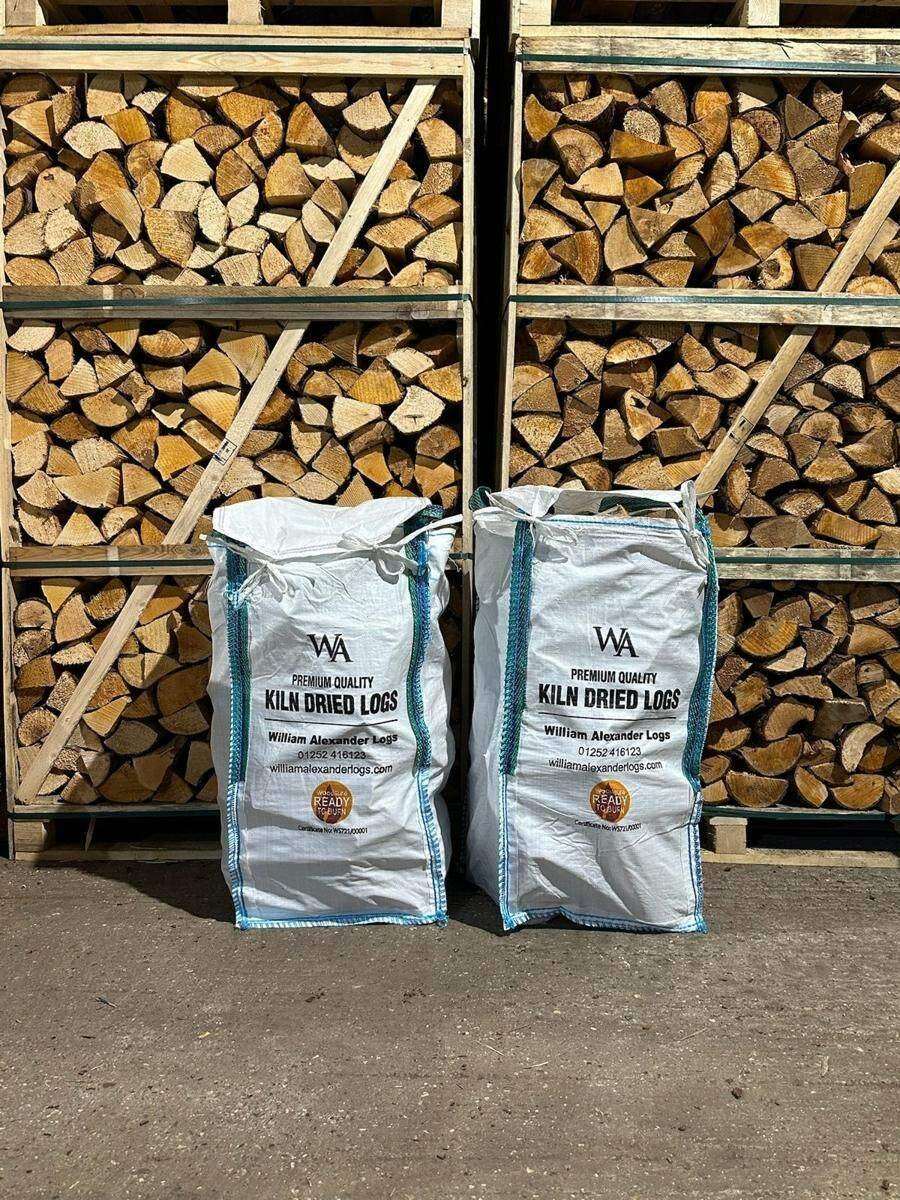
Kiln-dried logs arrive ready to burn. Storing them well is what keeps them that way until you need them.
Last updated August 2026 · William Alexander Logs
Kiln-drying gets your logs below 20% moisture before they leave our yard, but wood is not sealed: left somewhere damp, it will reabsorb moisture from the air, rain or ground over time. Good storage is simply about protecting the dry state your logs already arrived in, not drying them out from scratch.
A log store, shed, garage, or a covered spot against a house wall all work well. The two things that matter most are keeping rain off and keeping air moving, since damp, stagnant air is what slowly draws moisture back into wood, even under cover.
Stack logs on a pallet, bearers, or any raised surface rather than directly on soil or a wet path. Ground contact is one of the fastest ways for the bottom layer of a stack to pick up moisture, even in a stack that otherwise looks well covered.
Wood stacked too tightly, or wrapped completely in plastic with no ventilation, can trap moisture rather than shed it. A log store with slatted or open sides, or a stack with a gap against a wall, lets air move through and keeps everything drying rather than sweating.
The classic approach, top covered, sides open, works because rain is the main enemy and airflow is the second most important thing. If you only have a tarpaulin rather than a proper log store, drape it over the top of the stack and leave the sides open rather than wrapping the whole thing.
Stored well (dry, covered, off the ground, with airflow), kiln-dried logs will happily keep for a full season and well beyond. There is no rush to burn a delivery immediately. Many of our customers order a full winter's supply in one go, both for the better per-bag price and because storage is straightforward if you follow the steps above.
Both can burn well. The difference is how the moisture is removed, and whether you can trust it before you strike a match.
Read the guide →The single number that determines whether your fire lights easily and burns clean, or smoulders and smokes.
Read the guide →A practical, no-nonsense answer for open fires, wood burners, fire pits and pizza ovens, based on how often you actually burn.
Read the guide →Kiln-dried, Woodsure Ready to Burn certified firewood and peat-free compost, delivered on the day you choose.